Author’s Foreword
I have spent thirty years in the trenches of political journalism. My press badge has taken me from the rain-slicked steps of Capitol Hill to the smoke-filled backrooms of municipal conventions, and through the frantic, adrenaline-fueled nerve centers of campaign headquarters during historic election nights. Over three decades, I have watched charismatic idealists transform into jaded pragmatists, and I have witnessed the slow, calcifying rot of promises made in the heat of a campaign only to be quietly discarded in the halls of power. If thirty years on the beat teach you anything, it is that words are cheap, victory is fleeting, and the real war for the soul of a political movement begins not when the ballots are cast, but when the governing starts.
We are currently witnessing an unprecedented crisis of faith in western democracy. Voters across the globe are exhausted by a recurring theatrical cycle: politicians weaponize populist rhetoric to secure office, only to default to corporate preservation once seated behind mahogany desks. This betrayal does not merely breed cynicism; it creates a dangerous vacuum. When everyday people believe that voting changes absolutely nothing, they stop participating in the democratic experiment altogether. Or, far worse, they hand their collective destiny to a authoritarian strongman who promises to burn the entire system down.
This investigative piece is a deep dive into that exact existential crossroads. Five months into a watershed governing cycle, we look at two figures who won historic victories under the exact same banner—the promise to make life affordable for ordinary people. One chose the path of structural transformation; the other chose the path of corporate appeasement. The contrast between them is not merely an interesting policy debate; it represents a fundamental fracture that will dictate whether our democratic institutions survive or crumble into the jaws of fascism.

Chapter I: The Promise of Affordability and the Fork in the Road
The year began with an intoxicating wave of optimism for the American left. In the late months of the previous cycle, two distinct campaigns captured the national imagination by running on a simple, universal truth: it costs far too much to exist in America. The working class was suffocating under the twin weights of corporate price-gouging and stagnant wages. In the face of this systemic crisis, two rising stars within the Democratic ecosystem secured massive electoral mandates by promising to deploy the power of government as a shield for the vulnerable.
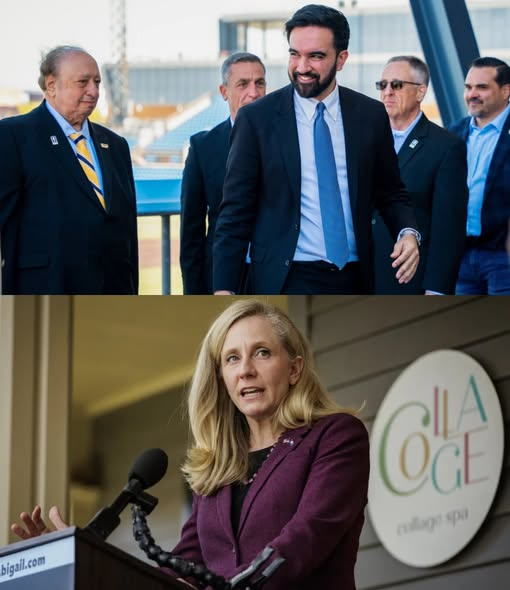
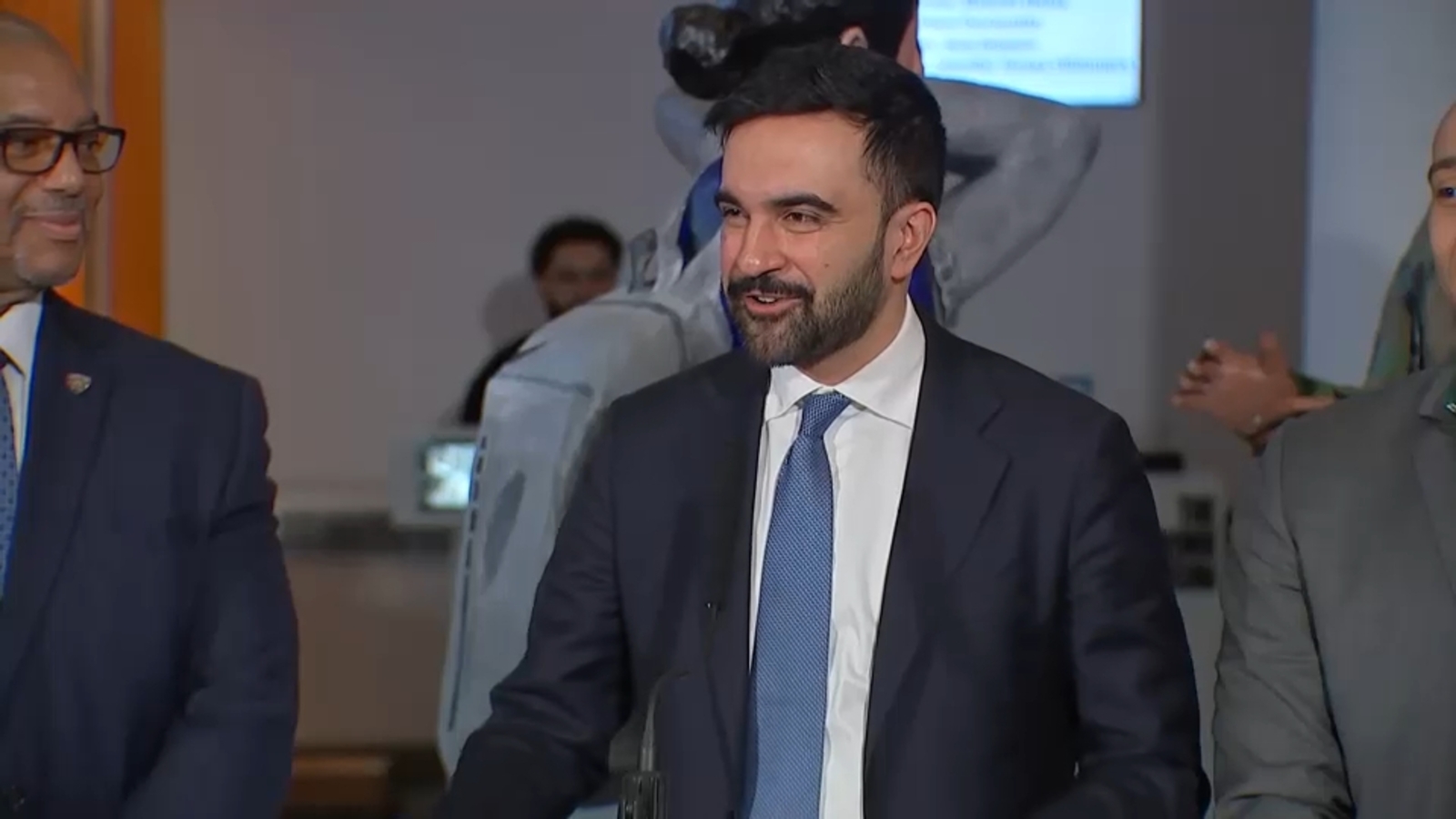
The first victory shook the foundations of metropolitan politics. Zohran Mamdani, a fierce, unapologetic democratic socialist, launched an underdog campaign for Mayor of New York City. His platform was built entirely around the visceral reality of urban survival: skyrocketing rents, predatory corporate landlords, and the crushing cost of basic childcare. He didn’t speak in the sterile, technocratic dialect of typical centrist consultants; he spoke directly to the anxieties of the bodega worker, the subway conductor, and the young family being priced out of their neighborhood. Against immense odds and entrenched institutional opposition, Mamdani won a stunning victory, entering City Hall with a clear mandate to reshape the economic architecture of America’s largest metropolis.
Simultaneously, further south down the Atlantic coast, another historic victory was unfolding. Abigail Spanberger secured the governorship of Virginia, engineering a triumphant Democratic trifecta for the first time in half a decade. As the state’s first female governor, Spanberger’s campaign was heralded as a masterclass in mainstream appeal. She, too, leaned heavily into an affordability agenda, pledging to lower costs for families, protect public education, and bring stable economic growth to the Commonwealth. To the institutional establishment, Spanberger was the gold standard of electability—a former intelligence officer who could bridge the gap between suburban moderates and working-class families.
On paper, these two leaders represented a unified front against the rising tide of right-wing populism. They were the twin engines of a party that claimed to stand for the working class. But as any veteran journalist knows, campaign poetry quickly collides with the prose of governance. Five months into their respective tenures, the ideological veneer has completely stripped away, revealing two radically divergent philosophies of power. One has chosen to confront corporate interests; the other has chosen to protect them.
Chapter II: The Socialist Experiment in the Metropolis
To observe Zohran Mamdani’s first five months in City Hall is to witness an aggressive, breathless reimagining of what municipal government can achieve when it refuses to bow to real estate barons and corporate lobby groups. From his first day in office, Mamdani treated his campaign promises not as a ceiling, but as a baseline for immediate executive and legislative action.
Consider the baseline crisis of the modern working class: childcare. For decades, politicians have offered sympathetic lip service to families spending upwards of half their income just to keep their children safe while they work. Mamdani bypassed the traditional committees and established universal, free childcare for two-year-olds across the five boroughs. This single initiative did not merely lower costs; it acted as an immediate economic emancipation for tens of thousands of working mothers who had been systematically locked out of the workforce by the predatory pricing of private care.
Predictably, the fiscal establishment warned that such sweeping social investments would bankrupt the city, pointing to an inherited twelve-billion-dollar budget deficit left by previous administrations. The corporate media predicted a fiscal cliff. Instead of using the deficit as an excuse to impose austerity on the poor, Mamdani turned his gaze toward the city’s vast pools of untaxed wealth. He successfully passed a landmark wealth tax targeting luxury second homes—the vacant pied-à-terres owned by international billionaires who treat New York real estate as an untaxed Swiss bank account. The revenue generated from this tax did not just close the historic deficit; it allowed Mamdani to deliver a completely balanced budget without cutting a single public service.
Furthermore, Mamdani understood that affordability is an illusion if tenants are left completely defenseless against predatory real estate conglomerates. He established the Mayor’s Office to Protect Tenants, an aggressive municipal agency weaponized with legal resources and code-enforcement powers. In just one hundred and fifty days, this office has clawed back over thirty-four million dollars in illegally withheld security deposits and stolen rent from unscrupulous landlords. More importantly, the city forced emergency, long-overdue structural repairs in more than six thousand neglected apartments, proving to working-class New Yorkers that City Hall cared more about their safety than a landlord’s profit margins.
This relentless focus on the micro-dynamics of everyday life extended from the grand to the granular. Mamdani’s administration launched a sweeping crackdown on corporate junk fees and deceptive digital subscription traps that quietly siphon wealth from working-class bank accounts. His infrastructure teams filled one hundred thousand potholes, poured fifty million dollars into historically neglected neighborhood parks, and rapidly carved out dedicated bus and bike lanes to reduce commuting times for low-income workers. To combat the artificial inflation of grocery monopolies, his administration announced the opening of the first city-owned, non-profit grocery stores in designated food deserts. In less than half a year, Mamdani has demonstrated that an active, democratic socialist government can tangibly make life cheaper, safer, and more dignified for ordinary people.

Chapter III: The Veto Pen and the Corporate Fortress
If New York City serves as an archive of progressive realization, Abigail Spanberger’s executive suite in Richmond has become a graveyard where working-class legislation goes to die. Armed with a historic Democratic trifecta in the General Assembly, Spanberger had a golden opportunity to codify protections that would transform life for millions of Virginians. Instead, she has spent her first five months wielding her veto pen as a shield for corporate interests, leaving labor organizers and progressive advocates in a state of absolute betrayal.
The most devastating blow came when the General Assembly passed a landmark bill granting half a million public sector employees—including teachers, sanitation workers, and first responders—the fundamental right to collectively bargain and unionize. It was a piece of legislation designed to lift wages and guarantee safe working conditions across the Commonwealth. To the shock of the labor movement, Spanberger issued a sweeping veto, using the exact same pro-corporate, anti-union justifications deployed by her conservative Republican predecessor. Organized labor, the traditional backbone of the Democratic coalition, was left stunned. Representatives released a scathing statement declaring that the governor had sent working people “the crystal clear message that they are no better off than they were under a Republican governor.”
This pattern of corporate appeasement quickly spread to the healthcare sector. As prescription drug prices continue to force seniors to ration their life-saving medications, the Virginia legislature passed a bill to extend Medicare’s federally negotiated drug prices to a broader pool of state residents. It was a common-sense measure designed to break the monopoly pricing of pharmaceutical giants. Spanberger vetoed it, handing an immediate, multi-million-dollar victory to pharmaceutical lobbyists who had flooded the state capitol with dark money.
Her defense of corporate impunity did not stop there. When the General Assembly passed legislation ensuring that citizens could launch class-action lawsuits against predatory corporations that engage in systemic wage theft or consumer fraud, Spanberger vetoed the bill, effectively closing the courthouse doors to everyday citizens who cannot afford to fight multi-billion-dollar legal teams on their own.
Even on basic matters of human rights and civil liberties, the governor chose the path of institutional conservatism. She vetoed a crucial bill that would have prohibited Immigration and Customs Enforcement (ICE) agents from making warrantless, disruptive arrests inside sensitive state locations like local courthouses and public hospitals—a measure intended to ensure that undocumented families could seek medical care and legal justice without the fear of state-sponsored separation. Finally, she defied the explicit will of her own electorate by vetoing the legalization of recreational cannabis, a policy that commands a supermajority of public support in Virginia, choosing instead to maintain the archaic carceral framework that has systematically devastated minority communities for generations.
Chapter IV: The Dangerous Mechanics of Disillusionment
As a journalist who has watched the rise and fall of political regimes across thirty years, I must warn you that the contrast between Mamdani and Spanberger is not an isolated disagreement over policy speeds. It is a terrifying window into the exact mechanism that destroys democratic societies from within.
When a politician campaigns on the promise of relief, secures the trust of the working class, and then uses their power to execute the exact same corporate agenda as the opposition, they inflict a deep, systemic wound on the body politic. They reinforce the most toxic and pervasive belief in modern society: that both parties are fundamentally the same, that the entire system is a rigged theater, and that voting is a useless exercise designed to pacify the masses.
This disillusionment is a catastrophic political trap. When everyday people lose faith in the capacity of democratic governance to improve their material reality, they do not simply remain neutral. They withdraw from the civic process entirely. Turnout collapses, grassroots enthusiasm evaporates, and the political base of the party undergoes a profound paralysis.
But the danger goes far deeper than electoral loss. History teaches us that when a population is abandoned by institutional moderates who protect the corporate status quo, they become deeply susceptible to the sirens of right-wing extremism. A desperate, economically suffocated populace will eventually look outside the boundaries of traditional democracy for answers. They become prime targets for a demagogue—a strongman who steps onto the stage, validates their very real anger, points toward vulnerable scapegoats, and promises to shatter the corrupt establishment by any means necessary.
Centrist Democrats frequently argue that cautious, business-friendly moderation is the safest way to protect democracy against the threat of the MAGA movement. This is a profound, historical delusion. Beating an authoritarian movement in a single election is never enough; it merely buys a society time. If you use that hard-won time to protect pharmaceutical profits, suppress labor unions, and insulate predatory corporations from lawsuits, you are actively clearing the path for the next wave of fascism. You cannot defeat right-wing populism with corporate technocracy; you can only defeat it by proving that democracy can deliver a better life than the alternative.
Chapter V: The Final Reckoning for the Left
The divergence between the socialist mayor in New York and the centrist governor in Virginia marks the end of an era of political ambiguity. The Democratic Party can no longer pretend to be a big tent that simultaneously protects the billionaire class and champions the working poor. The two philosophies are fundamentally incompatible, and the choice between them will determine the future of western democracy.
Zohran Mamdani has provided an empirical blueprint for victory and societal resilience. He has shown that when you possess the courage to tax luxury wealth, confront corporate monopolies, and directly fund the material needs of everyday families, you do not just pass a balanced budget—you build an unshakeable, passionate coalition of voters who will stand as an impenetrable wall against authoritarianism. You give people a tangible, living reason to believe in the survival of the republic.
Abigail Spanberger has provided the blueprint for democratic collapse. Her tenure is a warning of what happens when a party allows itself to be house-trained by corporate donors, prioritizing the comfort of lobbyists over the survival of the families who knocked on doors to put them in office. Every corporate-friendly veto signed in Richmond is a brick laid in the foundation of the next right-wing resurgence.
A SYSTEMIC CALL TO ACTION FOR THE AMERICAN ELECTORATE:
The time for passive consumption of political theater is over. We cannot afford to remain spectators as our leaders trade our collective future for corporate campaign contributions.
- Reject the corporate consensus: We must refuse to accept the lie that moderation is the only path to stability. We must actively support, organize, and campaign for candidates who treat corporate power not as a partner to be appeased, but as an adversary to be regulated and dismantled.
- Hold power accountable to material results: We must stop judging our political leaders by the poetry of their campaign speeches or the identity markers of their historic victories. We must judge them solely by the trajectory of their veto pens and the tangible material changes they bring to our kitchens, our workplaces, and our bank accounts.
- Organize outside the ballot box: True political transformation requires building independent, working-class institutions—tenant unions, labor organizations, and community cooperatives—that can exert undeniable pressure on centrist politicians, forcing them to either deliver for the people or be systematically replaced.
The choice before us is stark, absolute, and terrifyingly simple. We will either build an economy that serves the human needs of the multi-ethnic working class, or we will watch our democratic institutions dissolve into authoritarian chaos. We will either govern with the courageous clarity of Mamdani, or we will slide back into the jaws of fascism through the corporate concessions of Spanberger. Deliver for the people, or lose absolutely everything. There is no middle ground left to walk.
Leave a Reply