When Sanctity Becomes… Relative
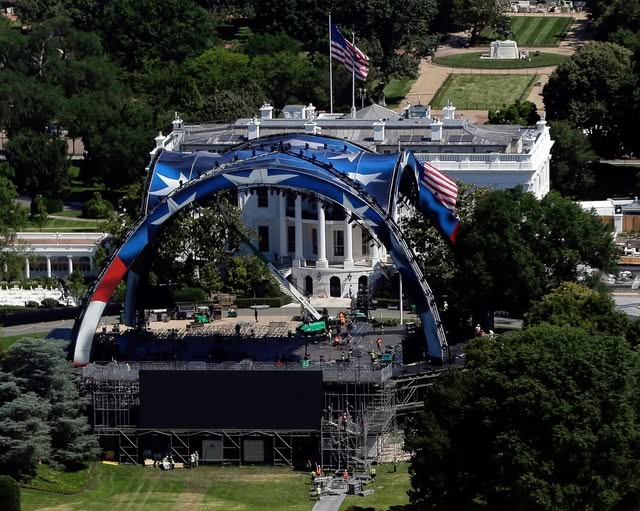
The White House has long been a symbol of power, tradition, and solemnity. Marble halls, perfectly polished floors, and flags standing tall all whisper an unspoken rule: formality is sacred. But what happens when the idea of “sanctity” collides with reality? When Volodymyr Zelensky stepped into the Oval Office without a suit, certain commentators erupted. Some declared it a breach of sacred protocol, a desecration of one of the world’s most iconic residences. Yet, when you look around the same halls, draped in banners, illuminated by over-the-top lighting, and prepared for grand press events, you can’t help but smile. Suddenly, the question arises: is the sanctity of the White House in the clothes you wear, or in the respect you command?

Zelensky: The Power of Simplicity
Zelensky’s choice to forego a suit was not a flippant act; it was a statement. Simplicity can carry strength. In a room filled with pomp, lights, and camera flashes, a leader who steps in wearing just a shirt and jacket draws attention not to himself, but to his purpose. The contrast is compelling: while the trappings of office scream for attention, simplicity demands respect. By focusing on substance over style, Zelensky communicates a message far louder than any tailored suit could. This is leadership stripped to its essence: clear, human, and inspiring.

Trump and a Different Kind of “Breach”
Donald Trump’s interactions with White House sanctity often took a different route—one of spectacle rather than simplicity. From demolishing sections of the East Wing to create private event spaces worth hundreds of millions, to renaming parts of the Kennedy Center after himself, Trump’s approach was about asserting presence. While Zelensky’s deviation from protocol might provoke chuckles, Trump’s displays demanded attention. Where one chose minimalism to inspire, the other leaned into grandeur to dominate. Both “breached sanctity,” but in starkly contrasting manners.
Comparing Two Styles of Disruption
Herein lies a lesson in contrast. Zelensky disrupts with restraint: calm, purposeful, and subtly powerful. Trump disrupts with extravagance: visually overwhelming, commanding, and theatrical. Both provoke conversation, both challenge norms, but their methods could not be more divergent. One invites admiration through relatability; the other captivates through audacity. And yet, both force observers to reconsider what “desecration” really means. Is it the clothes, the actions, or the impact left behind?
Humor in the Hallowed Halls
The absurdity is palpable. Imagine the media frenzy over a single missing suit in a room staged like Broadway’s brightest production. Zelensky’s wardrobe choice becomes a focal point in a setting already brimming with spectacle. The irony is delicious: while reporters dissect a missing tie, the room itself is over-decorated, over-illuminated, and almost cartoonishly ceremonious. Humor, in this context, is not mockery—it is perspective, reminding us that even the most sacred spaces can contain the ridiculous.
:max_bytes(150000):strip_icc():focal(749x0:751x2)/trump-white-house-renovations-052826-5aacd700112542db9dae0cde992a077f.jpg)
Lessons from the Contrast
The juxtaposition of Zelensky and Trump offers more than entertainment—it is a masterclass in leadership perception. Simplicity can inspire; extravagance can impress. Both alter norms, yet they leave distinct impressions. One choice uplifts and humanizes; the other dominates and provokes awe. Readers are reminded that style may shape initial impressions, but the substance defines lasting influence. Leadership is as much about presence as it is about authenticity, and these two figures offer extreme yet instructive case studies.
Inspiration Beyond Attire
For anyone navigating rules, rituals, or the weight of tradition, there is a takeaway. Sometimes, breaking the mold—whether through simplicity or audacity—can create impact. Zelensky reminds us that influence stems from intent, clarity, and humility. Trump reminds us that scale, visibility, and boldness leave indelible marks. Neither approach is inherently superior; both underscore that courage, confidence, and clarity matter far more than conformity. And for observers, both provoke reflection: how much do we value the rules versus the results they produce?
Who Really “Breached” the White House?
In the end, the question lingers: who truly desecrated the sanctity of the White House—the leader in a simple jacket, or the one who reshaped spaces and stamped his name across institutions? Perhaps it is not the clothes, the lights, or even the banners that define breach. It is the impact of actions and the inspiration—or astonishment—they generate. Humor, humility, spectacle, and substance converge in these contrasts, leaving a lesson clear: sanctity is relative, influence is absolute, and leadership is measured not by attire, but by effect.

Leave a Reply